
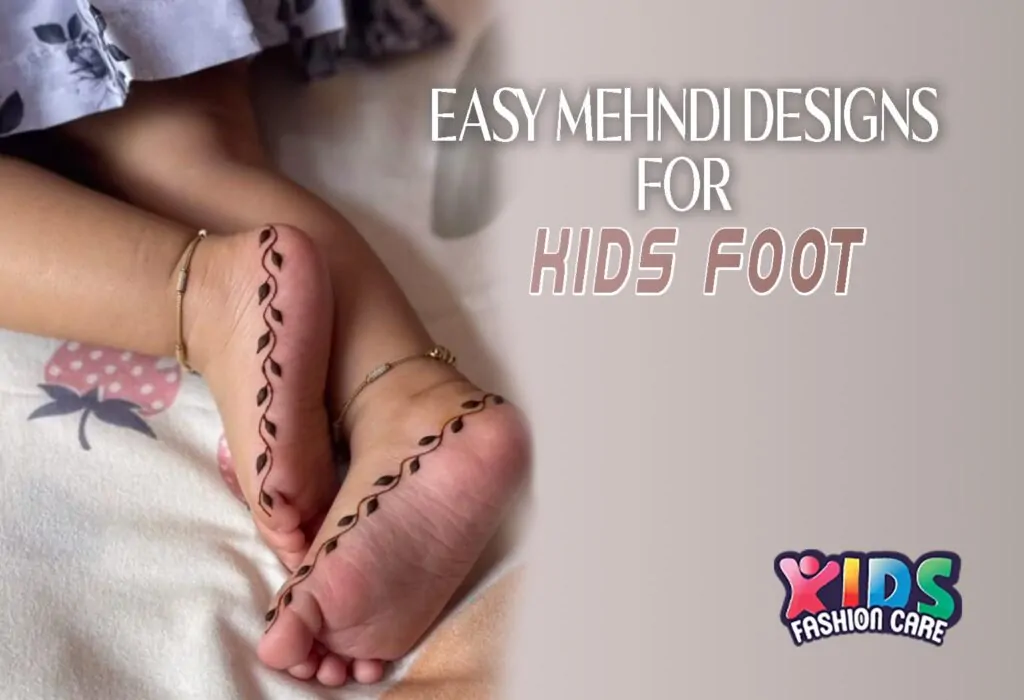

Mehndi designs for kids’ feet are easy henna patterns applied to children’s feet rather than hands. These designs include floral ankle wraps, smiley faces, peacock feathers, minimal footbands, cartoon characters, leafy trails, sun motifs, and sole designs. Natural, chemical-free henna is safe for kids aged 3-5 years and older when you perform a patch test first and avoid black henna. For kids, herbal, organic, and natural tree mehndi work best. They’re safe to use and give you a nice reddish-brown color that stays for about a week. Make sure you’re watching while applying, stick to simple patterns, and let it sit for at least 4-6 hours before any water touches it. This waiting time helps the color develop properly and last longer.
Table of Contents
I absolutely love applying mehndi on my daughter. There’s something fun about seeing her excited when the designs come on her skin.
Mehndi is super popular in Indian and Arabian cultures, and people wear it during weddings, Eid, and festivals. But when you put mehndi on hands, kids can’t use their hands for 2 hours while it dries. And kids have zero patience! The moment you put mehndi on their hands, they suddenly need to pee, want to eat, want to play, or start fighting with their siblings. It’s frustrating, honestly.
That’s why I started doing easy mehndi designs for kids’ feet instead. It sounds weird, but it actually looks so cute! The best part is that your kids can run around, play, and do whatever they want without you constantly yelling “Don’t touch anything!” The design stays put because feet don’t get nearly as much action as hands.
In this blog, I’m going to walk you through everything I wish someone had told me when I first started. We’ll cover whether it’s actually safe (because that was my biggest worry), I’ll show you 7 super simple designs that even I can do, share the precautions that actually matter, and answer some concerns. Let’s dive in!
Is Mehndi Safe for Kids’ Feet?
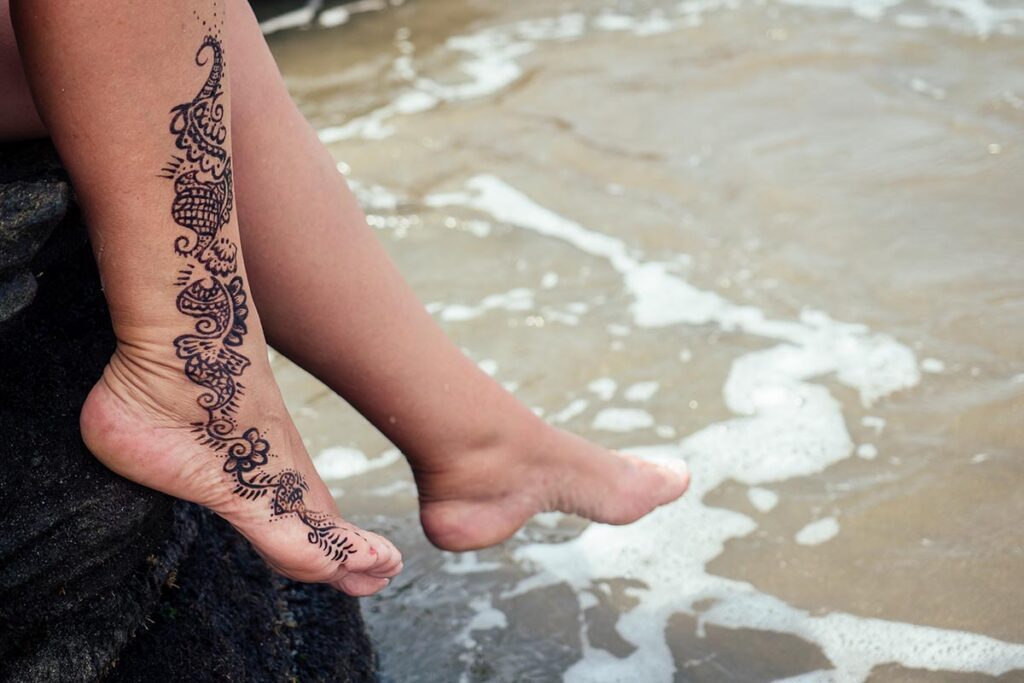
Okay, so the big question every mom asks: Is mehndi actually safe for my child? The honest answer is yes, but with some important care.
Babies and very young toddlers (under 3 years) have incredibly delicate skin, and so many kids deal with eczema or other skin sensitivities. Your worry is completely valid and honestly, I was the same way before trying it on my daughter.
Natural, chemical-free mehndi is perfectly safe for kids aged 3-5 years and older. But you need to be careful and always do a patch test first. This is important. No shortcuts on this one.
What Makes Mehndi Safe (and What Doesn’t)
You absolutely need to use the RIGHT kind of mehndi. I can’t stress this enough. Always choose natural henna with zero chemicals. Never ever buy “black henna” or cones that say they have added chemicals or dyes. These can cause serious allergic reactions, burns, and even scarring.
Before You Apply Mehndi, Do This
Before putting mehndi on your child’s feet, do a patch test. Apply a tiny amount on their inner wrist and wait 24 hours. If there’s no redness, itching, or reaction, then it’s safe to use. This one step can save you so much worry!
Important Things to Know
Some kids have a genetic condition called G6PD deficiency, and if your child has this, henna can actually cause problems with their blood cells. If your child has this condition, skip mehndi entirely. Also, avoid putting mehndi on broken skin, the face, or near eyes and mouth. Just stick to the feet!
Keep the design simple and don’t leave the paste on for too long. Let it dry completely before your child runs around or touches it.
Red Flags: When Mehndi is NOT Safe
Before buying any mehndi try to see these warning signs:
- It turns instantly very dark or black
- It smells like chemicals or dye
- The package doesn’t list ingredients clearly
- It says “fast drying” or “chemical enhanced”
If you see any of these, put it back. It’s not worth risking your child’s skin!
7 Easy Mehndi Designs for Little Feet
#1: Floral Ankle Wraps
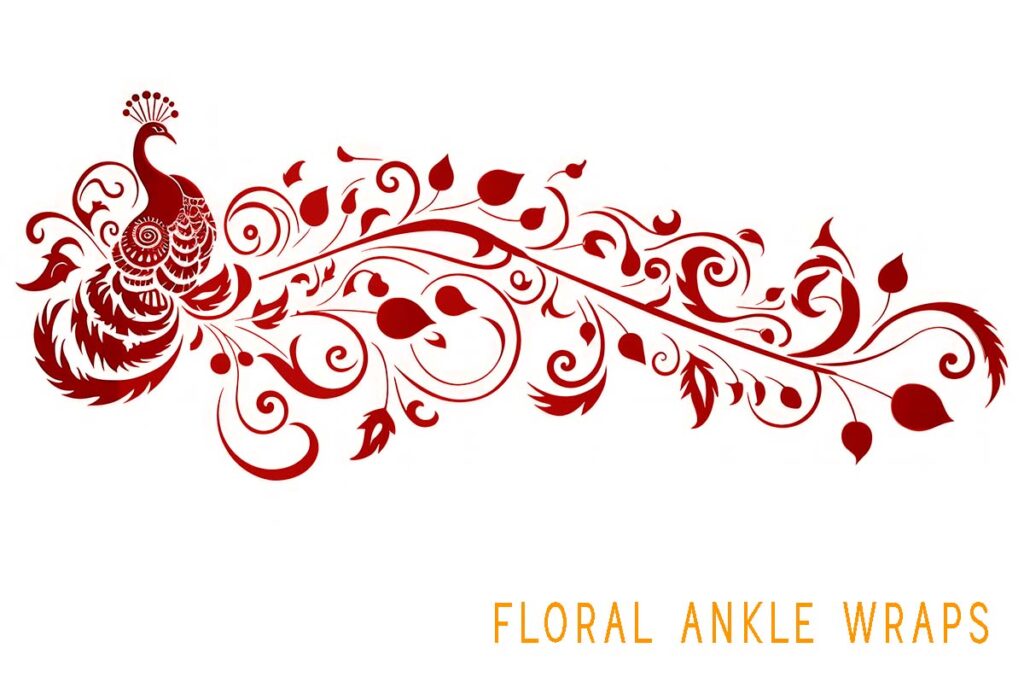
Simple flowers and vines that wrap around the ankle in a minimalist style. I love how elegant this looks without being too dense. It’s honestly so cute on little feet.
#2: Smiley Face Design
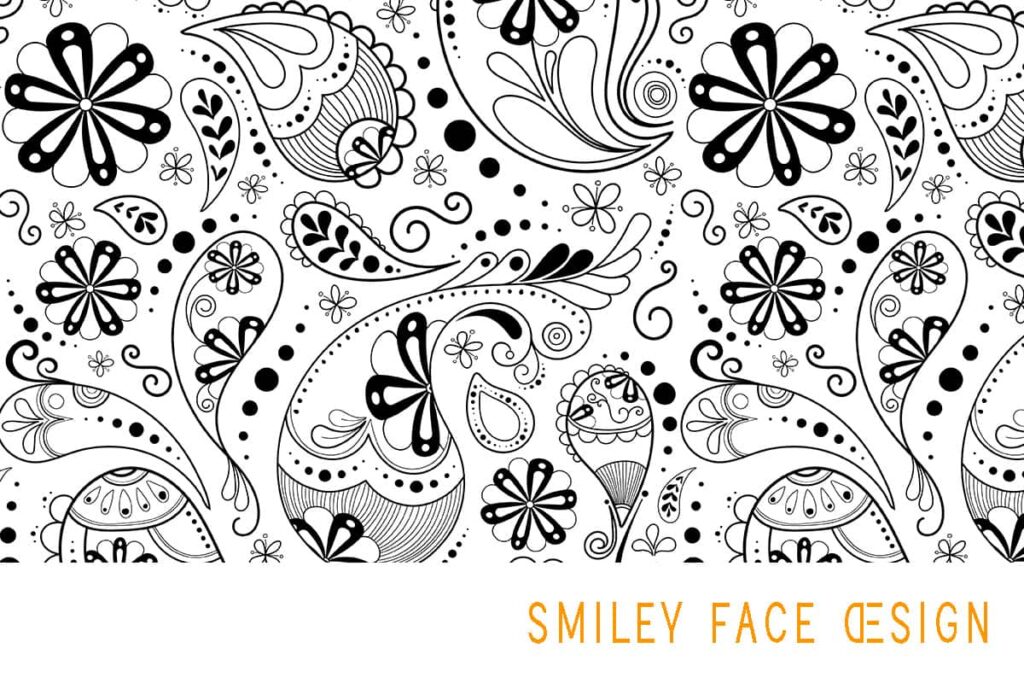
Just a simple smiley face on the top of the foot or toes. Kids really love this one because it’s playful and makes them smile. The best part is that it’s hidden when they wear shoes but shows up when they’re barefoot at home. Such a cheerful little surprise.
#3: Peacock Feather Design

A peacock feather on the instep or side of the foot. This represents beauty and grace in traditional designs. You can do it on one foot or mirror it on both for a balanced look. I’ve tried both ways, and honestly, it looks stunning either way.
#4: Minimal Footbands

Mehndi-designed like a real anklet around the ankle with tiny flowers, simple dots, or vines wrapped around. It’s delicate, dries quickly, and looks like adorable jewelry!
#5: Cartoon Character Outlines
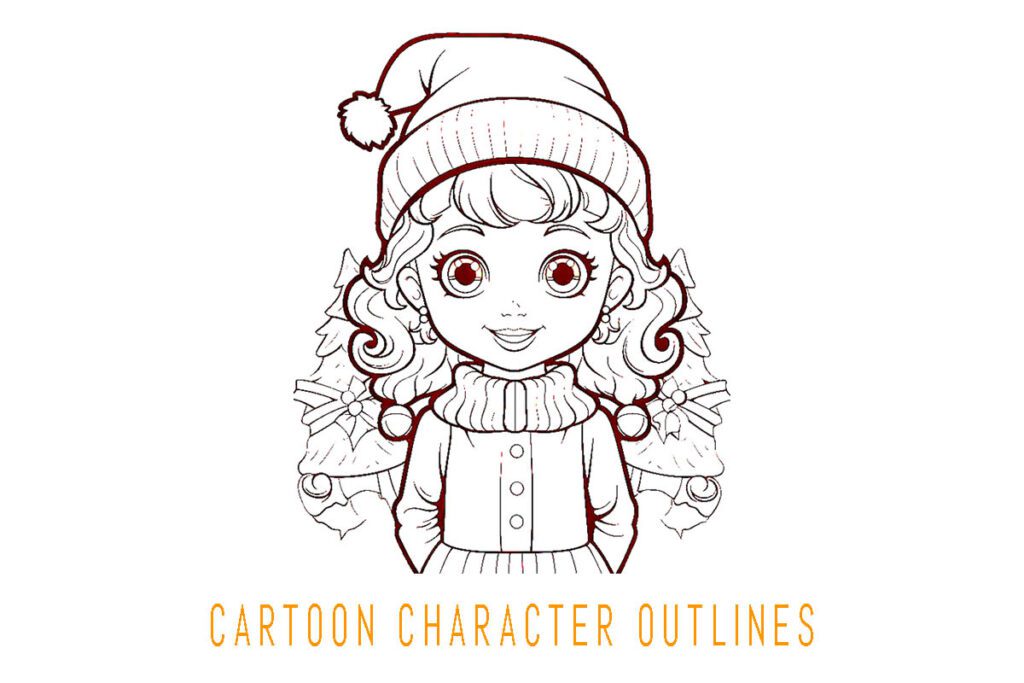
Just the silhouette of your child’s favorite cartoon characters like Pikachu, Minions, Mickey Mouse, or basic superhero logos. Super fast to apply because it’s just simple lines, kids absolutely love wearing their favorite characters on their feet, and it’s a fun, modern twist on traditional mehndi that feels special and personalized!
#6: Leafy Trail Design
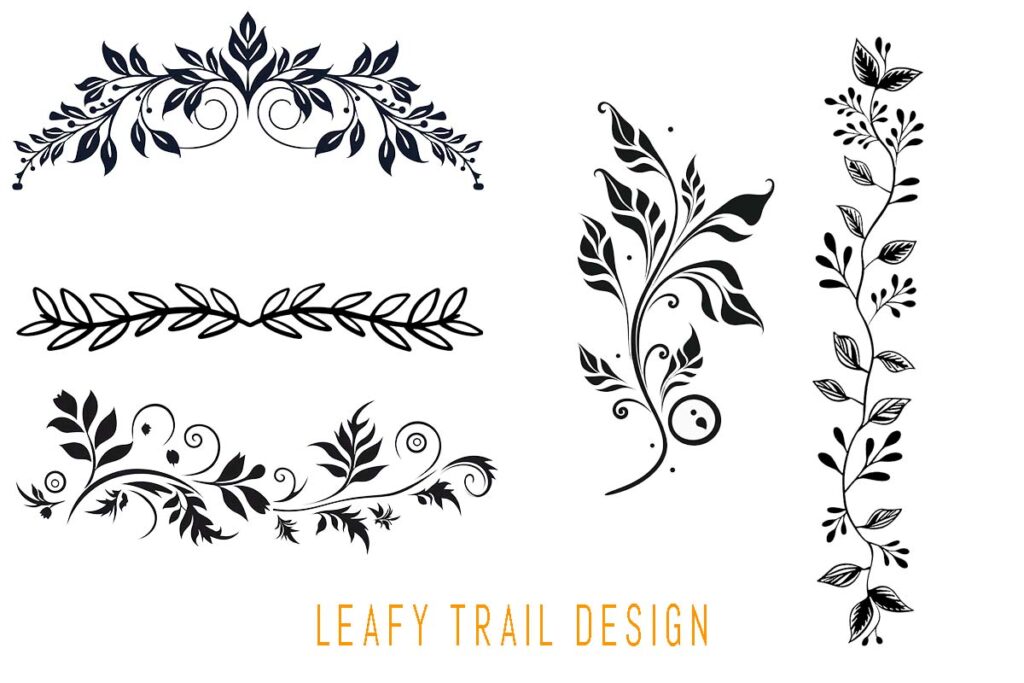
Draw a vine with leaves going diagonally across the foot from the ankle. Use basic leaf shapes, dots, and curved lines for a soft look. This design is light and looks good on little feet.
#7: Sun Motif Design
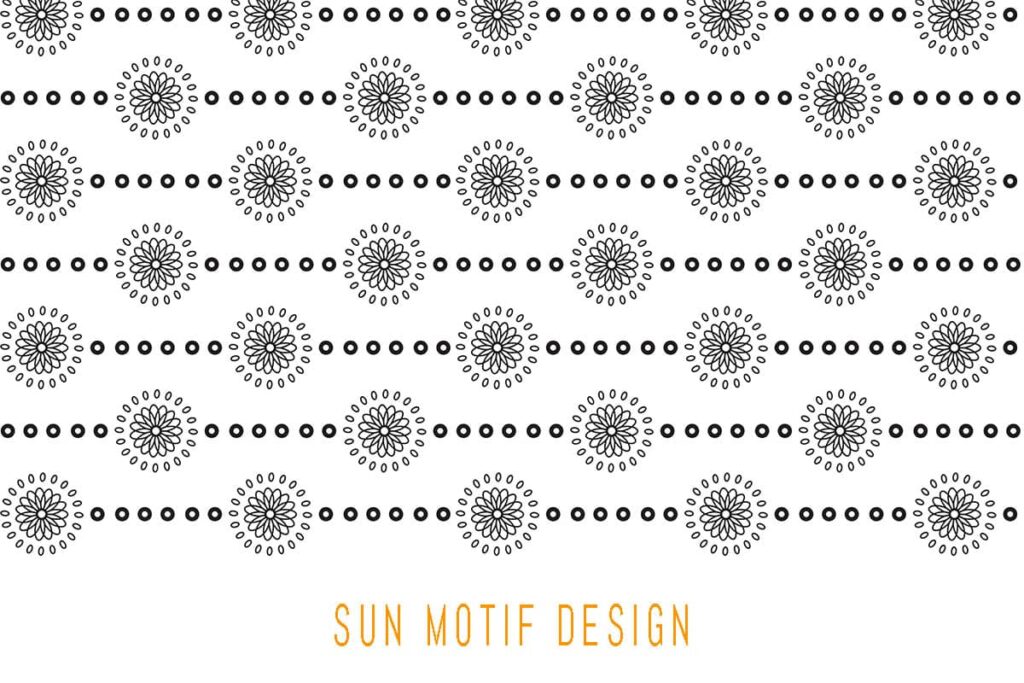
A basic sun pattern that stands for warmth and positivity. In tradition, it means strength and new beginnings. This design is cheerful and quick to do, so it works great when kids can’t sit still for long.
#8: Design Under Feet (Sole Designs)
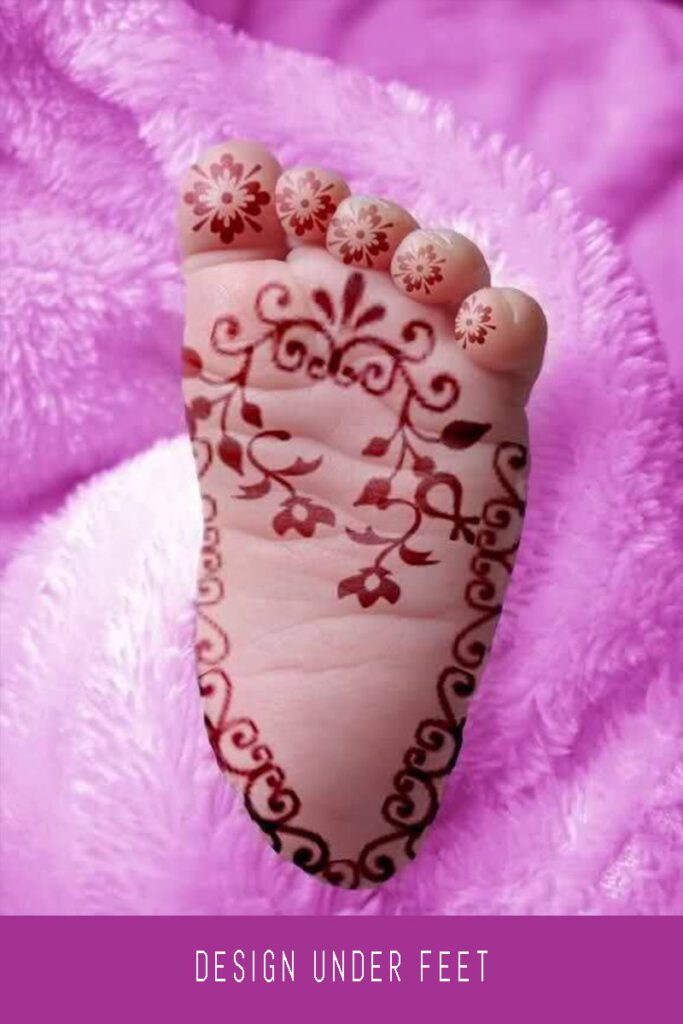
Try applying mehndi underneath your child’s feet instead of on top. Go with basic shapes like stars, dots, flowers, or happy faces. Keep the lines thick since you’ll want to work fast with restless kids. It’s not something you see often, which makes it special for celebrations. The stain comes out surprisingly dark by morning, and children get excited when they discover it.
Related: Easy and Simple Mehndi Designs for Kids Little Hands
Important Things to Remember Before Applying Mehndi to Kids’ Feet
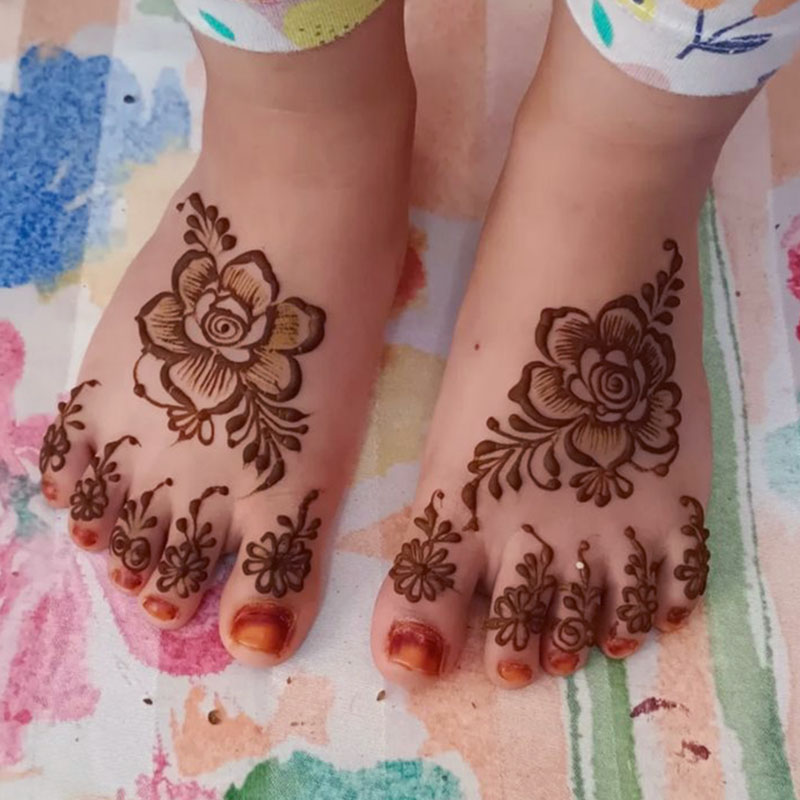
Look, mehndi is not that harmful, but chemical mehndi can be dangerous for kids’ delicate skin. I haven’t faced any troubles because I always use organic mehndi, and that’s my recommendation for every mom. Yes, it takes 2 or 3 days to show color and needs more drying time, but it’s completely safe for your child. If you want to use instant mehndi or other color mehndi, you need to be very careful. So keep these simple tips in mind before applying mehndi to your child’s feet.
Do a Patch Test First
Before putting mehndi on your daughter’s feet, test it on her inner wrist first. Apply a tiny bit and wait 24 hours. If there’s no redness or itching, you’re good to go. This one simple step can save you so much worry later.
Buy Good Quality Mehndi
Don’t pick up just any mehndi cone you see at the store. Buy from sellers you trust and read the label before purchasing. Look for words like “natural henna” or “organic henna” on the package. I check online reviews first whenever I’m trying a new brand. Good quality mehndi does cost more, but your child’s skin deserves it.
Never Use Black Mehndi
Black mehndi has dangerous chemicals that can burn skin and cause bad allergic reactions. Avoid it completely, even if the dark color looks appealing. Only use natural brown or reddish mehndi. Keeping your child safe is what matters most.
Clean Your Child’s Feet Well
Wash your daughter’s feet with soap and water, then dry them completely. Remove any dirt or lotion because these actually stop mehndi from staining properly. What I do is wash, dry, and then wait about 10 minutes before applying. This helps the color develop much better.
Stay With Your Child While Applying
Always watch your child while putting mehndi on. Don’t let them touch their face, eyes, or mouth while the paste is wet. Keep them busy with a show, toy, or story so they don’t move around. My daughter watches cartoons, which keeps her calm and still.
Keep Them Comfortable While It Dries
Mehndi takes 30 to 40 minutes to dry, and kids get impatient! Let your child sit on the couch or bed and keep them entertained. Watch a show together, play quiet games, or just spend time together. Make it fun, not boring, so they cooperate!
Don’t Wash Immediately After
After the mehndi flakes off, don’t wash it right away. Wait at least 4 to 6 hours before washing. The longer you wait, the darker and prettier the color becomes! I apply mehndi in the evening, let it dry overnight, and wash it the next morning. This gives a beautiful, long-lasting stain on her feet.
Types of Mehndi for Kids
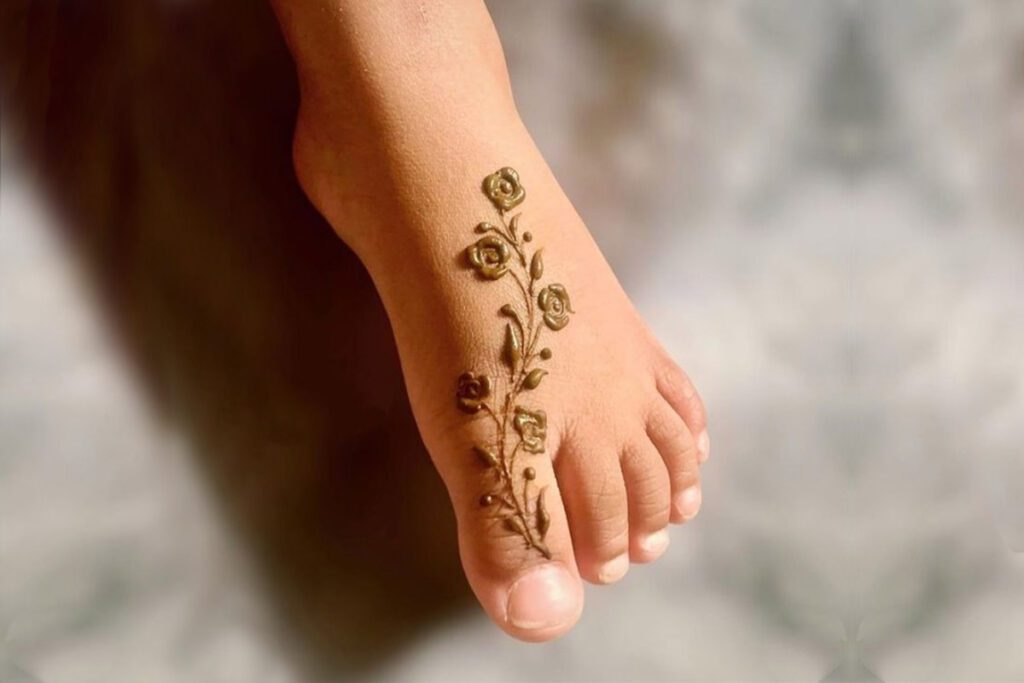
The first time I bought mehndi for my daughter, I felt lost. Stores have so many options, and I wasn’t sure which ones were actually safe for kids. Here’s what I figured out after trying different types, so you don’t have to wonder like I did.
Herbal Mehndi
Herbal mehndi is pure henna mixed with natural herbs like neem, indigo, and amla. This is one of the safest types for kids. It gives a nice reddish-brown color that stays about 5 to 7 days on children’s feet. It has no chemicals in it, so you won’t worry about allergies or skin problems. It costs a bit more, but I think it’s worth the extra money for safety.
Organic Mehndi
Organic mehndi is certified henna without pesticides or bad additives. It’s close to herbal mehndi but usually doesn’t have the extra herbs mixed in. This works well for kids with sensitive skin or mild eczema. I’ve used organic mehndi several times, and the color comes out really nice. It needs more time to show the full color than other types, but that’s good because it means there are no strong chemicals in it. If your child’s skin gets irritated easily, organic mehndi is a good choice.
Natural Tree Mehndi
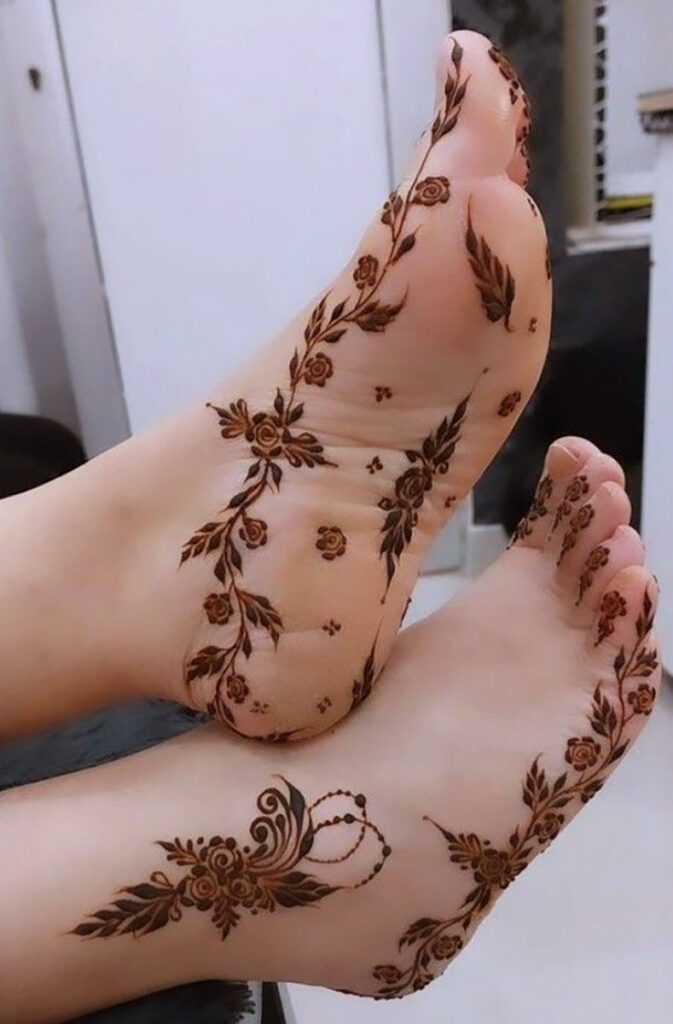
This is pure henna extracted directly from henna leaves (Lawsonia inermis plant) with absolutely no additives whatsoever. It’s the purest form of mehndi you can get, and honestly, it’s the safest for kids’ delicate feet. The stain is a deeper, richer brown color, and it lasts longer than other types. The only downside is that it’s the most expensive option. I use natural tree mehndi for special occasions when I really want my daughter’s mehndi to look extra special and last longer.
Artificial Color Mehndi
Please avoid this type for your kids! Artificial color mehndi contains synthetic dyes and coal tar chemicals that can be really harmful to children’s sensitive skin. It might give instant dark color and look appealing, but it’s not worth the risk of allergic reactions, rashes, or skin irritation. I made the mistake of buying this once without reading the label properly, and I’m so glad I did a patch test first. My daughter had a mild reaction, and that’s when I decided to never use artificial mehndi again. Just skip this type completely!
Glitter or Gel Mehndi
Glitter mehndi is henna mixed with glitter particles or gel polymers, making it super fun and sparkly for kids! My daughter absolutely loves this type because it looks like magic on her feet. It’s great for birthdays, parties, or special celebrations. The stain quality varies depending on the gel used, and it might not last as long as pure henna, but that’s okay because it’s more about the fun and excitement. Use it occasionally for special events, but don’t make it your everyday choice because the gel particles might irritate sensitive skin over time.
Frequently Asked Questions (FAQs)
Is mehndi safe for kids?
Natural henna is perfectly fine for children. Just make sure you do a small test patch first and stick with pure henna products. Black henna is a big no because it contains chemicals that can seriously harm your child’s skin, causing burns and lasting damage.
How long does mehndi last on kids’ skin?
You can expect the design to last about a week on your child’s feet. If they’re constantly in the water or bathing multiple times a day, it’ll fade sooner. The stain starts dark and gets lighter as days go by, but you’ll see it for at least five days.
What is the best age for kids to try mehndi?
Four or five years old works best in my experience. At that age, they can usually manage to sit for half an hour without fidgeting too much. With toddlers younger than three, their skin is too delicate and they’re likely to taste or touch everything, so I’d hold off. If your three or four-year-old is calm and cooperative, go ahead with a tiny design using organic henna.
How can I remove mehndi quickly?
Wash the stained area with soap and lukewarm water a few times. You could also try rubbing a mixture of lemon juice and baking soda on it. Honestly though, just let it wear off naturally if you can, because too much scrubbing will irritate their skin.
Where can I find inspiration for kid-friendly mehndi designs?
Pinterest and Instagram have loads of simple ideas that work well for children. YouTube tutorials are great too. Try searching for “easy henna for kids feet” or something similar. I usually watch a few Instagram videos first because seeing someone apply it in real time helps me understand the technique better before I attempt it myself.
Conclusion
Applying mehndi on your kid’s feet instead of hands has made such a difference for me. It keeps our traditions alive while being actually practical. My daughter gets to have her mehndi and I don’t have to constantly worry about her messing it up or getting upset because she needs to use her hands.
Through all of this, I’ve realized it isn’t really about how pretty the design looks.I enjoy the time we spend together while applying it. She gets happy showing it to others, and we’re creating our own little traditions. She feels proud when relatives see her mehndi.
Use pure, natural henna and follow the safety steps I mentioned earlier. I’ve bought the wrong product before and sometimes skipped the patch test when I was rushed. Learn from my mistakes so your first time goes better than mine did. Your child will love it, and you’ll create some sweet memories in the process.