
A good kids’ clothes cabinet should have a mix of hanging space, shelves, and drawers to suit different age groups. Declutter every few months, create zones inside, and use drawer dividers and vertical folding to maximize space. Getting kids involved in the setup makes it easier to maintain long-term.
Table of Contents
Have you ever walked into a kid’s room and thought, how did it get this bad?
My sister has one girl and one boy. And let me tell you, the mess is something else. Clothes on the floor, shoes by the door, drawers that never fully close. She kept saying it was just a phase. Spoiler: it was not.
They have had the same two old clothes cabinets for years. It worked fine when my niece and nephews were little. But kids grow. Their clothes grow. And somehow, everything that used to fit perfectly just… does not anymore.
So when she called me asking for help figuring out what to do, I knew exactly what she needed. A proper guide. Something that covers everything from what to buy to how to set it all up without losing your mind in the process.
That is exactly what this is. Trying to figure out if you need a new cabinet or just a better system? Either way, I have got you covered. We are going to talk about what to look for when buying, how to set everything up, and how to actually keep it organized once you do.
Is Your Kids’ Clothes Cabinet a Mess?
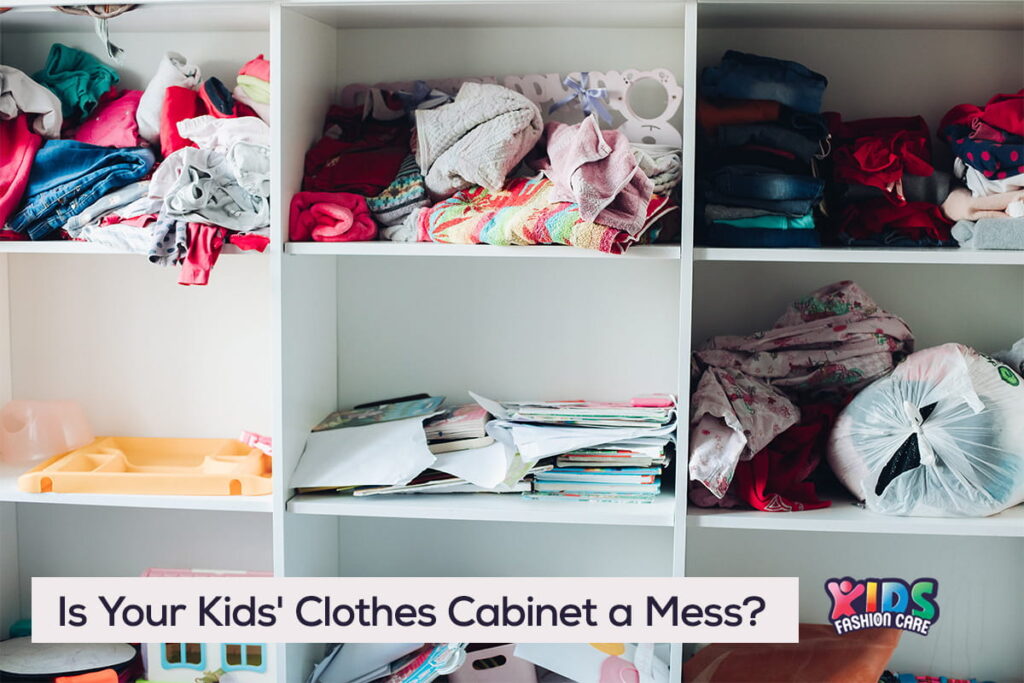
Before anything else, before you even think about buying something new or reorganizing what you have, there is one thing that has to happen first.
You need to go through everything inside it.
I know. Nobody wants to hear that. But skipping this step means you are just moving clutter from one spot to another. Trust me, I have seen it happen.
The Declutter Step You Cannot Skip
Pull everything out. Yes, everything. Dump it on the bed if you have to. Starting with an empty cabinet is so much easier than shuffling things around, trying to make room.
Once it is all out, sort into four piles:
- Keep: Fits now, gets worn, good condition.
- Store: Too big for now, but will fit soon, or seasonal pieces like heavy coats.
- Donate: Still in good condition, but no longer fits or has never been worn.
- Toss: Worn out, stained, beyond saving.
And please, do not keep things out of guilt. That shirt your kid wore twice in two years is not suddenly going to become a favourite.
How Often Should You Sort Through Kids’ Clothes?
With kids, clothes stop fitting faster than you expect. So I have a good suggestion. Go through the cabinet every three to four months. It does not have to be a full overhaul every time, just a quick check to see what still fits and what needs to move on.
Season changes are a natural reminder, too. When summer ends and the jackets come back out, that is the perfect moment to pull everything together and see where things stand.
What to Do With Clothes They Have Outgrown?
Do not let outgrown clothes sit in the cabinet, taking up space. Once something no longer fits, it needs to go. Here are a few options that actually work:
- Pass them down: Know someone with younger kids? Bag them up and pass them along.
- Donate: Most local shelters and clothing banks welcome kids’ clothes in good condition.
- Sell: Apps like Poshmark or Facebook Marketplace are great for barely-worn kids’ clothes.
- Vacuum bags for the next size up: Bought ahead for next season? Store those under the bed in vacuum bags so they are out of the cabinet until actually needed.
Which Clothes Cabinet Works Perfectly for a Kid’s Room?
Buying a new clothes cabinet sounds simple enough. Until you actually start looking.
There are so many options out there, and it is very easy to end up with something that looks amazing in the store but just does not work in real life. Before you spend the money, it helps to know what you actually need.
What Should You Look for Before You Buy?
The biggest mistake most parents make is buying based on looks alone. A cabinet that works for a kids’ room needs to do more than just look nice. A few things worth checking before anything else:
- Size: Measure your space first. Not just the width but the depth too. A cabinet that sticks out too far into a small room makes everything feel cramped.
- Height of the hanging rail: For younger kids, a lower rail means they can hang and grab their own clothes without asking for help every single morning. As they grow, you can always adjust.
- Number of sections: A mix of hanging space, shelves, and drawers works far better than one big empty hanging area. Kids have small clothes, so a single full-length hanging section wastes a lot of vertical space.
- Durability: Kids are not gentle. Look for something solid with good reviews on the hinges and drawer runners. Cheap ones tend to fall apart within a year.
- Safety: For younger kids, especially, make sure the cabinet can be wall-anchored. Tip-overs are more common than people think.
Adjustable Shelves or Fixed: Which One is Worth It?
Fixed shelves are cheaper and simpler. But they lock you into one layout forever.
Adjustable shelves cost a little more, but they give you the flexibility to change things up as your kids grow and their storage needs change. For a kids’ room, adjustable shelves are a better option.
A toddler’s folded clothes and a teenager’s hoodies need very different amounts of shelf space. Adjustable shelves mean you can always change things up as your kids grow.
There are some great options available worldwide worth looking at. Stompa and Flexa are both popular choices, well-built and designed with kids in mind. If you are in the US, Pottery Barn Kids offers solid customisable options. For something more budget-friendly, Argos has a decent range that does the job without breaking the bank. Have a look around and see what is available in your region; you might be surprised at how many good options are out there.
Sliding Doors or Hinged: Which Saves More Space?
This one really comes down to your room layout.
Hinged doors need clear space in front of the cabinet to swing open. If the room is small or the cabinet sits close to a bed or desk, that becomes a real problem every single morning.
Sliding doors don’t have any problem like this. No extra clearance needed, and the room feels more open. The only downside is that you can only access one side at a time, so the interior layout needs a little more thought.
For most kids’ rooms, especially smaller ones, sliding doors are the better choice.
A few options worth looking at are Rauch, which is sturdy and comes in various sizes, and Flexa, which is designed specifically for kids and holds up really well over time. Both work great in smaller rooms with sliding door setups.
How Do You Set Up the Cabinet So Kids Can Use It Themselves?
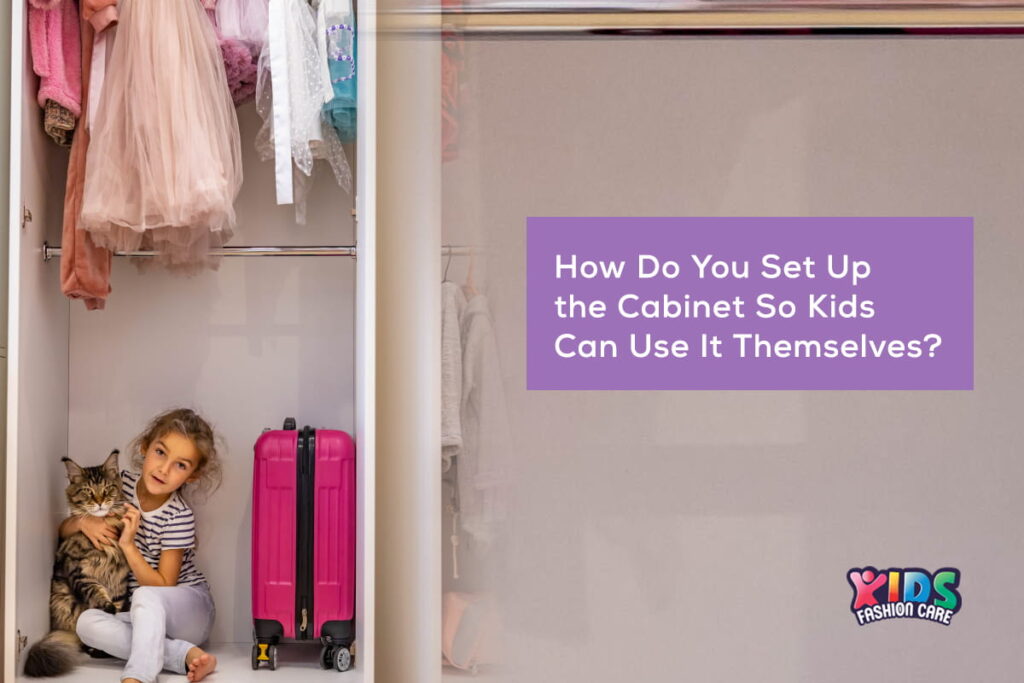
It was very hard for my sister to learn the cabinet setup.
She spent a good hour setting up the cabinet once. Everything was folded, colour coordinated, looking very Pinterest-worthy. Her kids dismantled it in two days flat. Clothes stuffed back in the wrong place, drawers half open, nothing where it should be.
The problem was not the kids being messy. The setup just made zero sense for how they actually use it. So I suggested starting over, this time with them in mind.
How to Create Zones Inside the Cabinet
The simplest thing that worked for them was splitting the cabinet into zones. Each zone has one category only.
- School uniforms go right at the front, where they are easiest to grab. No hunting around on a Monday morning.
- Daily clothes like t-shirts, joggers, and jeans go in the middle section. These get used the most, so they need to be the most accessible.
- Pyjamas and sleepwear get their own shelf or drawer. Small but separate makes a big difference.
- Special occasion clothes go towards the back or up high. They rarely come out, so they do not need to settle in the front section.
Once kids know the zones, they stop throwing things in randomly. Because they know exactly where everything needs to be put.
How to Use the Inside of the Cabinet Door
This spot goes to waste in most homes. And it really should not.
A few hooks keep school bags and caps off the floor. A hanging fabric organizer is perfect for socks, hair ties, and small things that always go missing. For older kids, a small mirror on the inside works great too.
None of this requires drilling, either. Most of it hooks over the door or sticks on with adhesive strips.
Can You Double the Hanging Space in a Small Cabinet?
It is possible, and it is probably the most useful thing you can do in a small cabinet.
Kids’ clothes are short. A full-length hanging rail leaves a huge gap underneath that just collects shoes and random junk. Raise the main rail up a little and add a second rail below it. Top rail for longer things like school shirts and jackets. Bottom rail for shorter items like tops and shorts.
Same cabinet, double the hanging space.
You can pick up a double hanging rail insert for very little, and it drops straight into most standard cabinets without any tools needed.
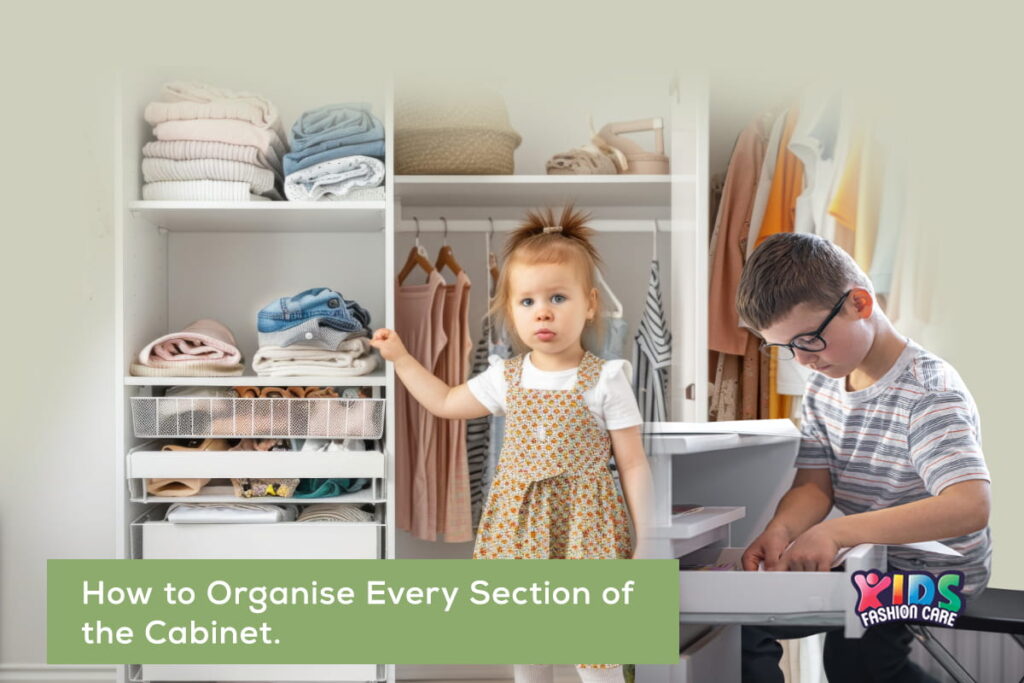
How to Organize Every Section of the Cabinet
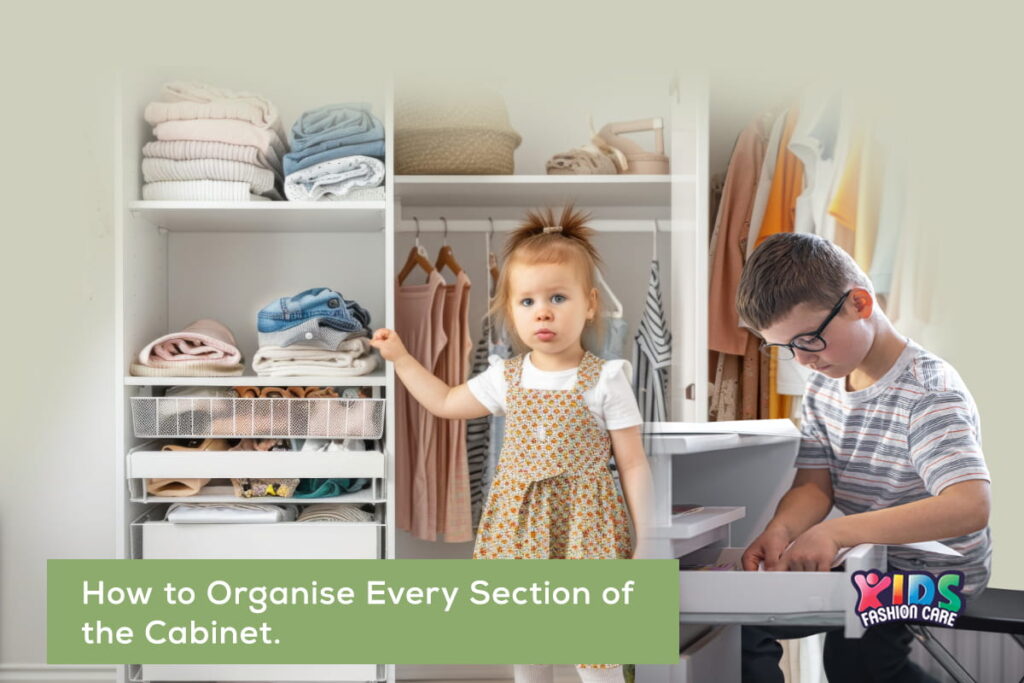
You have the cabinet. You have cleared it out. Now comes the part most people skip over and then wonder why everything falls apart two weeks later.
Organizing is not just about making things look neat. It is about making things work. For you, and more importantly, for your kids.
Let me break it down section by section.
What is Vertical Folding and Does It Really Work?
If you have spent any time on organization content online, you have probably come across vertical folding. Also known as the file folding method. And if you have not tried it yet, let me tell you, it is a game-changer.
So what exactly is it?
Instead of stacking clothes on top of each other in a pile, you fold each item into a small rectangle and stand them upright, side by side, like files in a filing cabinet. That is it. Simple as that.
Does it actually work, though?
Honestly? Yes. And I say that as someone who was very skeptical at first.
Here is why it works so well for kids specifically. When clothes are stacked, your child pulls out the one at the bottom, and the entire pile collapses. You have seen it happen. We all have. With vertical folding, each item is visible from the top and easy to grab without disturbing anything else.
My sister tried this after I showed her, and she was genuinely surprised. Not because they suddenly became tidy, but because the drawer actually stayed usable for more than three days.
A few tips to make it work:
- Fold everything to roughly the same width so they stand evenly.
- Group by type first, t-shirts together, joggers together, and so on.
- Colour coding within each group makes it even easier for kids to find what they are looking for without digging.
It takes a little practice at first. But once you get the hang of it, you will not go back to stacking.
How to Use Drawer Dividers for Small Items
Without any dividers in the kids’ cabinet, they are just chaos waiting to happen.
Socks mixed in with underwear, hair ties tangled around everything, and random bits nobody can explain.
It is a mess most parents know too well. Drawer dividers solve this completely, and they do not have to be expensive or fancy. Split the drawer into sections, socks in one spot, underwear in another, hair accessories in a third. Everything has a home, and nothing gets mixed up.
What should you look for in a good drawer divider?
- Adjustable ones are best. Fixed dividers lock you into sections that may not suit your drawer size or your kids’ needs. Adjustable ones let you shift things around as needed.
- Fabric dividers work well for soft items. They are gentle on clothes and easy to reposition.
- Bamboo or plastic grid dividers are better for drawers with smaller items like hair clips, socks, or accessories. They are easy to wipe clean, too, which matters more than you think with kids.
A quick tip I always share with parents: involve your kids when setting up the dividers. Show them where each thing goes. Let them place a few items in themselves. When kids help set up the system, they are far more likely to actually follow it.
It does not have to be perfect. It just has to make sense to them.
Because at the end of the day, the best organizational system is the one your kids can actually use on their own.
Frequently Asked Questions
What is a Good Kids’ Clothes Cabinet with Drawers?
Look for smooth drawer runners, easy-grip handles, and solid build quality. Something your child can open and close on their own without it falling apart within a year.
How Many Drawers Should a Kids’ Clothes Cabinet Have?
Three to four drawers is a sweet spot for most kids. For toddlers, two can be enough. For teens, you might need a little more!
What Size Wardrobe is Best for a Small Kid’s Room?
Between 80cm and 120cm wide works well. Keep the depth around 50 to 55cm so clothes hang properly without losing things at the back.
What is the Best Small Wardrobe for a Kid’s Bedroom?
Something compact with sliding doors to save floor space. Adjustable interiors are a bonus so the layout can change as your child grows.
Is a 3-Drawer Wardrobe Enough for a Child?
For younger kids, yes. Pair it with hanging space and use dividers smartly. For older kids, adding a small chest of drawers alongside it helps.
Conclusion
Getting the cabinet sorted is the easy part. Keeping it that way is where most parents give up. But honestly, all it takes is a simple ten-minute reset before bed. Everything back in its zone, drawers closed, nothing on the floor. Make it part of the evening routine, and it stops feeling like a chore altogether.
Once a month, do a quick size check. Pull anything that no longer fits and move it out. It takes fifteen minutes at most and saves you from discovering half the wardrobe is unwearable right before the school run. Trust me, you do not want that stress.
The last piece is getting your kids involved. Show them the zones, let them put their own clothes away, and for younger ones, picture labels on drawers work really well. When kids feel ownership over their space, they actually take care of it. Not perfectly, but enough.
A good cabinet, a simple routine, and kids who know where things go. That is really all you need.